Pith balls on thread, with positive and negative charged rods.
5A20.20 • D+10+4
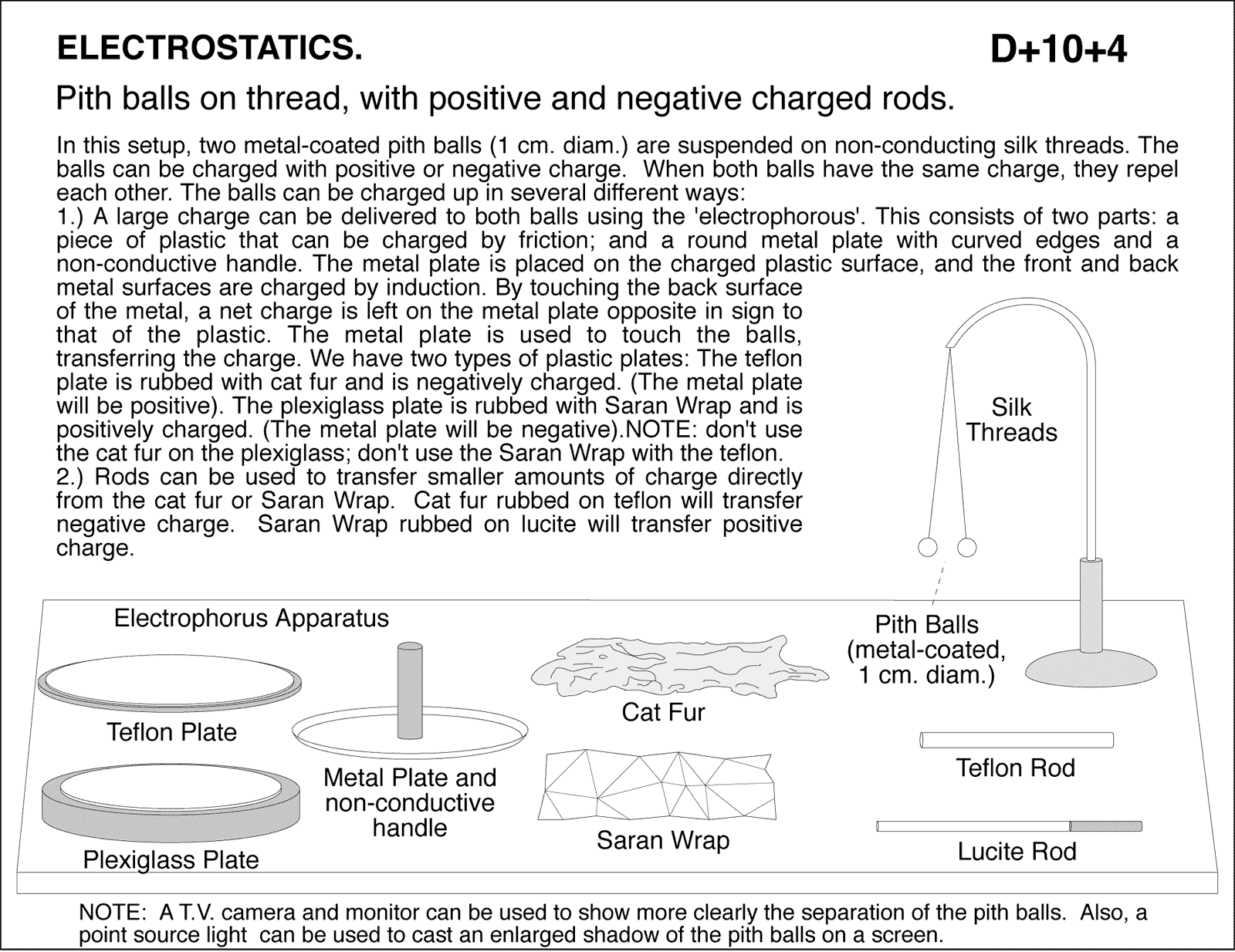
Pith balls on thread, with positive and negative charged rods. NOTE: A T.V. camera and monitor can be used to show more clearly the separation of the pith balls. Also, a point source light can be used to cast an enlarged shadow of the pith balls on a screen. In this setup, two metal-coated pith balls (1 cm. diam.) are suspended on non-conducting silk threads. The balls can be charged with positive or negative charge. When both balls have the same charge, they repel each other. The balls can be charged up in several different ways: 1.) A large charge can be delivered to both balls using the 'electrophorous'. This consists of two parts: a piece of plastic that can be charged by friction; and a round metal plate with curved edges and a non-conductive handle. The metal plate is placed on the charged plastic surface, and the front and back metal surfaces are charged by induction. By touching the back surface of the metal, a net charge is left on the metal plate opposite in sign to that of the plastic. The metal plate is used to touch the balls, transferring the charge. We have two types of plastic plates: The teflon plate is rubbed with cat fur and is negatively charged. (The metal plate will be positive). The plexiglass plate is rubbed with Saran Wrap and is positively charged. (The metal plate will be negative).NOTE: don't use the cat fur on the plexiglass; don't use the Saran Wrap with the teflon. 2.) Rods can be used to transfer smaller amounts of charge directly from the cat fur or Saran Wrap. Cat fur rubbed on teflon will transfer negative charge. Saran Wrap rubbed on lucite will transfer positive charge.
Fall 2013 - Fall 2026