Microwave diffraction by a large adjustable iris.
6C10.50 • E+10+20
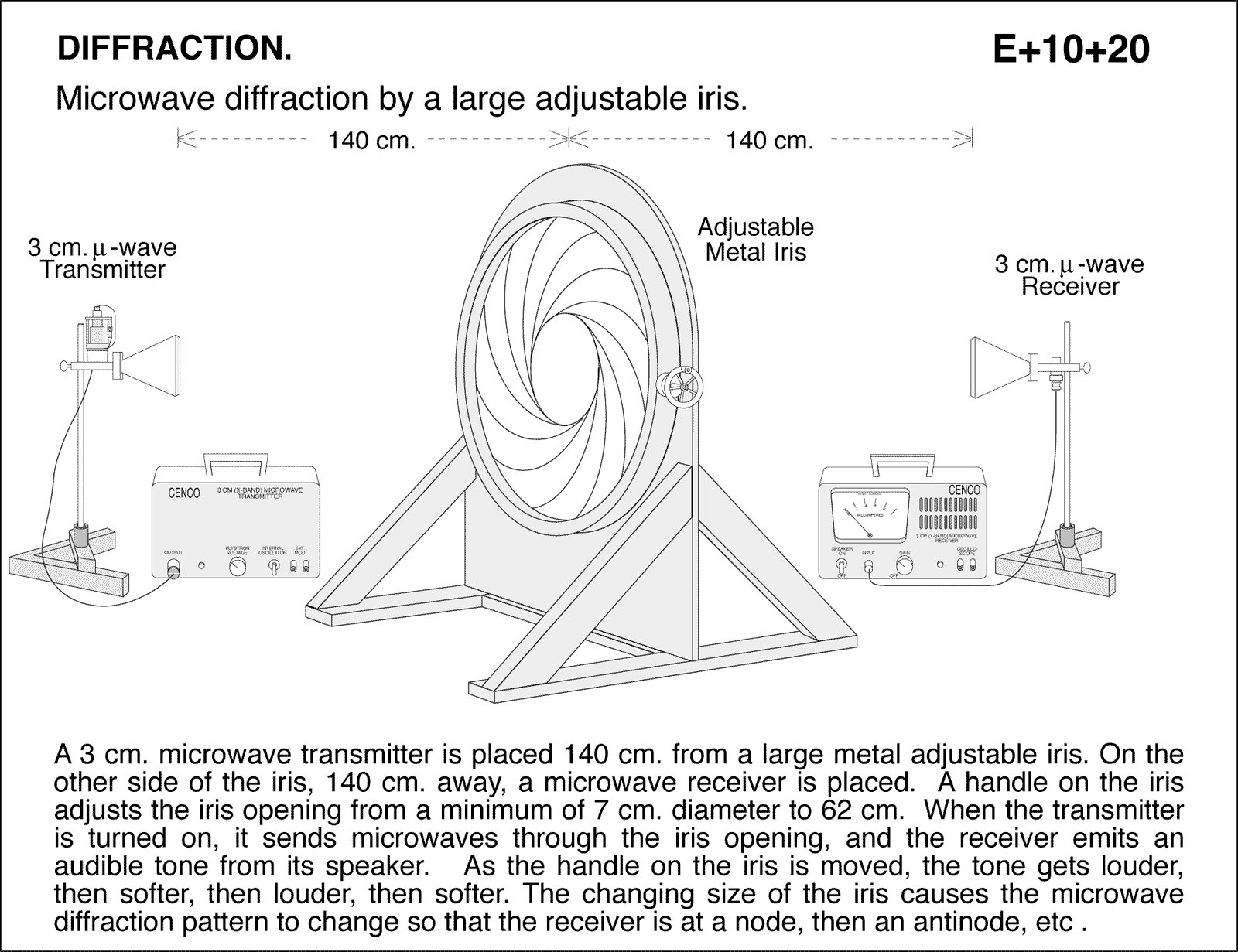
Microwave diffraction by a large adjustable iris. A 3 cm. microwave transmitter is placed 140 cm. from a large metal adjustable iris. On the other side of the iris, 140 cm. away, a microwave receiver is placed. A handle on the iris adjusts the iris opening from a minimum of 7 cm. diameter to 62 cm. When the transmitter is turned on, it sends microwaves through the iris opening, and the receiver emits an audible tone from its speaker. As the handle on the iris is moved, the tone gets louder, then softer, then louder, then softer. The changing size of the iris causes the microwave diffraction pattern to change so that the receiver is at a node, then an antinode, etc .
Usage
Fall 2013 - Fall 2023
10
reservations across 4
classes
Related Demos
E+10+0 Single slit diffraction using laser beam through adjustable slit. E+10+5 Laser beam through sets of 1, 2, or multiple electro-formed slits. E+10+10 Airy's disk: Pinhole diffraction using laser beam. E+10+15 Diffraction about pinhead, razorblade, wood screw using laser. E+10+25 Microwave zone plates. E+10+30 Bragg diffraction using microwaves and steel balls in foam cube. E+10+40 Two points of light diffract through an iris, shown with T.V. camera. (RETIRED) E+10+45 Limit of resolution: Two small lamps on adjustable slide. E+10+46 Limit of Resolution: Blue or Red LEDs that can be brought together E+10+50 Poisson's spot: Interference pattern within circular shadow. E+10+55 Laser beam diffraction off coil and being reassembled (DNA analysis simpulation a la Rosalind Franklin's experiment)