Helmholtz resonators drive radiometer vanes, using tuning forks.
3D30.40 • B+45+50
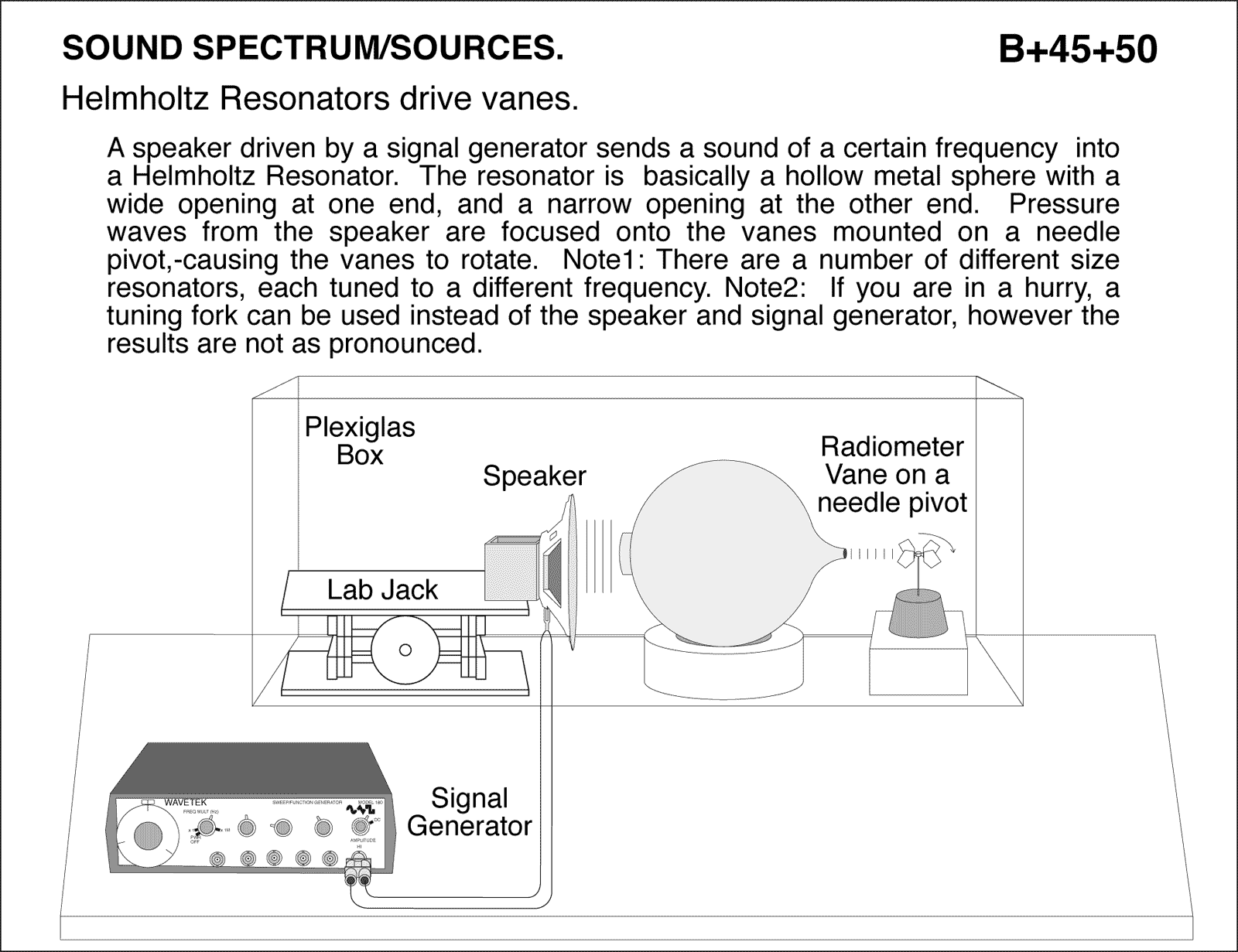
Helmholtz Resonators Drive Vanes, A speaker driven by a signal generator sends a sound of a certain frequency into a Helmholtz Resonator. The resonator is basically a hollow metal sphere with a wide opening at one end, and a narrow opening at the other end. Pressure waves from the speaker are focused onto the vanes mounted on a needle pivot,-causing the vanes to rotate. Note1: There are a number of different size resonators, each tuned to a different frequency. Note2: If you are in a hurry, a tuning fork can be used instead of the speaker and signal generator, however the results are not as pronounced.
Usage
Spring 2014 - Fall 2022
4
reservations across 3
classes
Related Demos
B+45+0 Steel spring pendulum, inverted, vibrates at 10 Hz. B+45+5 Giant tuning fork, barely audible, displayed with stroboscope. B+45+10 Ultrasound transducers (40 kHz) as both sources and receivers. B+45+15 Bell ringing in a jar evacuated with pump. B+45+20 Savart's wheel: Toothed wheel and cardboard or air jet. B+45+25 Siren: large, electric motor driven. B+45+30 Compressed air jet blows through spinning disk with holes. B+45+32 Twirling Tube B+45+35 Sprockets on shaft rotate against a card to make sound. B+45+40 Caruga horn: Varigated tube to blow through B+45+41 Feedback from microphone/speaker system. B+45+42 Hoot Tube B+45+45 Galton's whistle: Compressed air whistle. B+45+51 Helmholtz Resonators with tuning forks and a candle B+45+55 Casio electronic synthesizer with amp and speaker.