Barkhausen effect: Magnet and coil with soft iron core.
5G20.10 • D+35+6
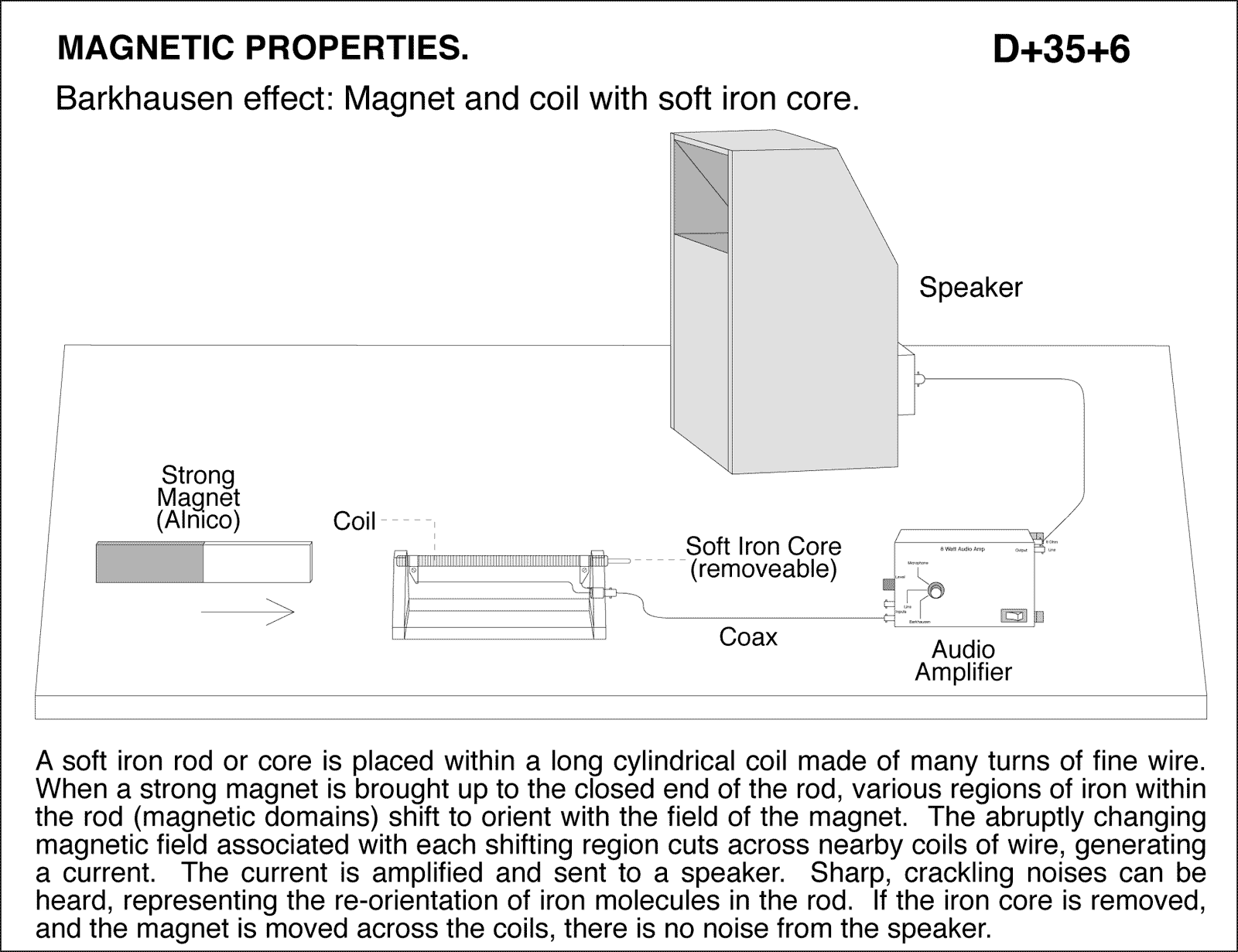
Barkhausen effect: Magnet and coil with soft iron core. A soft iron rod or core is placed within a long cylindrical coil made of many turns of fine wire. When a strong magnet is brought up to the closed end of the rod, various regions of iron within the rod (magnetic domains) shift to orient with the field of the magnet. The abruptly changing magnetic field associated with each shifting region cuts across nearby coils of wire, generating a current. The current is amplified and sent to a speaker. Sharp, crackling noises can be heard, representing the re-orientation of iron molecules in the rod. If the iron core is removed, and the magnet is moved across the coils, there is no noise from the speaker.
Usage
Spring 2022
1
reservation across 1
class
Related Demos
D+35+0 Wobbly bar: Magnets in frame balanced by repulsive forces. D+35+1 Inverter Magnet D+35+2 Making a magnet by electromagnetic induction. D+35+4 Making small magnets by breaking up a larger magnet. D+35+7 Barkhausen effect model: Many tiny magnets on pivots on OHP. D+35+9 Para and diamagnetic materials in magnetic field with OHP. D+35+10 Para and diamagnetic materials in magnetic field with arc lamp. D+35+12 Linear motor: An iron core jumps into a solenoid. D+35+14 YBaCuO pellet with magnet in liquid nitrogen on TV camera. D+35+15 Mass Driver D+35+16 Mass driver: One of these balls is not like the other D+35+20 Curie temperature