Helmholtz Resonators with tuning forks and a candle
3D30.40 • B+45+51
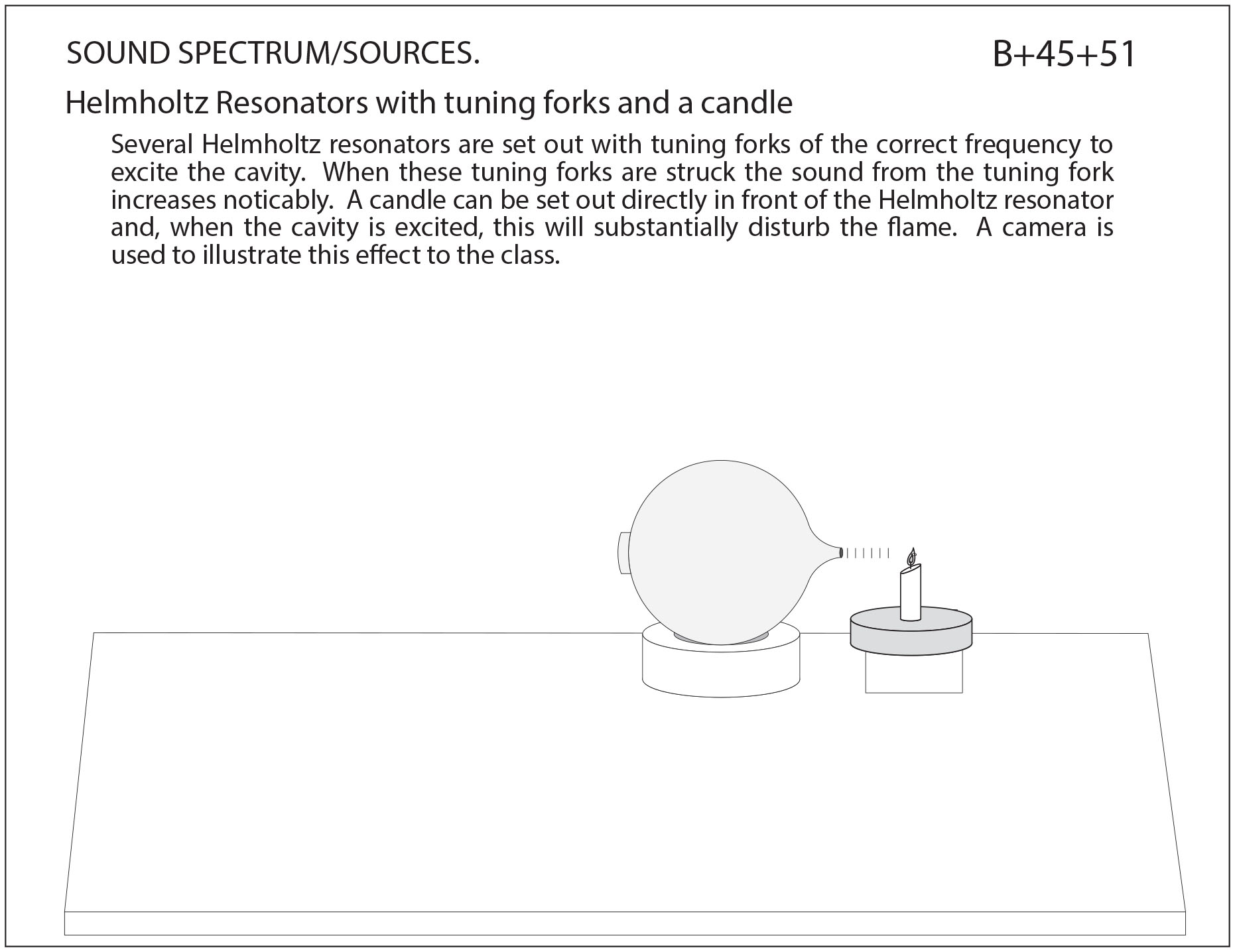
Several Helmholtz resonators are set out with tuning forks of the correct frequency to excite the cavity. When these tuning forks are stuck the sound from the tuning fork increases noticeably. A candle can be set out directly in front of the Helmholtz resonator and, when the cavity is excited, this will substantially disturb the flame. A camera is used to illustrate this effect to the class.
Usage
Spring 2016 - Fall 2025
11
reservations across 2
classes
Related Demos
B+45+0 Steel spring pendulum, inverted, vibrates at 10 Hz. B+45+5 Giant tuning fork, barely audible, displayed with stroboscope. B+45+10 Ultrasound transducers (40 kHz) as both sources and receivers. B+45+15 Bell ringing in a jar evacuated with pump. B+45+20 Savart's wheel: Toothed wheel and cardboard or air jet. B+45+25 Siren: large, electric motor driven. B+45+30 Compressed air jet blows through spinning disk with holes. B+45+32 Twirling Tube B+45+35 Sprockets on shaft rotate against a card to make sound. B+45+40 Caruga horn: Varigated tube to blow through B+45+41 Feedback from microphone/speaker system. B+45+42 Hoot Tube B+45+45 Galton's whistle: Compressed air whistle. B+45+50 Helmholtz resonators drive radiometer vanes, using tuning forks. B+45+55 Casio electronic synthesizer with amp and speaker.